Trying to add a payment method? You can do this on the
Why is Oregon’s fly fishing renowned? Maybe it’s the variety of catches throughout the year. Wild rainbow trout, summer steelhead, chinook salmon, all in clean cold water from the mountains.
“People love the challenge of finding the best fishing spots,” Bryson Fairlamb, manager of The Caddis Fly Angling Shop in Eugene, told me. “If you tie your own flies, it’s crafting something unique that’s natural enough to fool the fish. It’s beautiful, and historic.”
Exploring new fishing spots on the river is more easily done in a boat — but the rivers often have rapids. So old-style craft evolved to be lighter and more nimble. One such craft was the McKenzie River drift boat.

Drift boats, like much of nature, are made of curves. How wood is bent to elegant shapes is detailed in “Oregon’s Boat,” a documentary produced by Randy Dersham. The film’s stories include Tom Kaarhus of Eugene, who revolutionized drift boat design in the 1930s, and Keith Steele of Leaburg, who built more than 3,000 boats by hand starting in the 1950s.
When Steele was working, the Grand Canyon was threatened, with two dams already built — downstream at Lake Mead and upstream at Lake Powell — and two more proposed within the canyon itself. To stop them, conservationist Martin Litton knew more people should feel the power — physical and emotional — of the river that shaped the canyon.

To carry guests, he made an unlikely choice: Oregon’s wooden drift boat. He began buying them from Steele and called them dories because they reminded him of New England cod fishing dories.
Litton was described as a force of nature — like the canyon itself. The combination of his advocacy and the experiences of the people riding those elegant, historic wooden boats through the canyon helped win the day. Legislation in 1968 blocked the proposed dams. Because the canyon was protected, in 1975 I was able to enjoy it fully on a kayak trip and see those dories dance through big Colorado River rapids.
“These boats represent the elegance of the river itself,” said Cindell Dale in the documentary “About Damn Time: The Dory Women of Grand Canyon.”
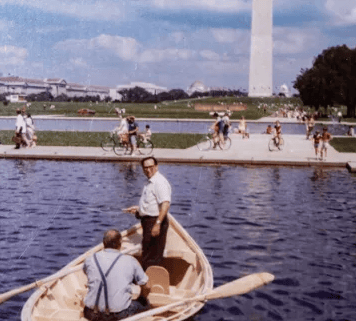
A McKenzie River drift boat was also honored as an Oregon representative to the 1976 bicentennial celebration — and rowed in the Lincoln Memorial Reflecting Pool.
A few years later, in 1983, Lake Powell was near capacity from record snowmelt, a far cry from today’s low water. Dam managers released a flood-level 70,000 cubic feet per second (by contrast, the upper McKenzie averages about 1,000 cubic feet per second) — and banned boating in the canyon.
But three guides ignored the ban and the risk. In a Litton dory named Emerald Mile after threatened redwoods in California, they made a record run: 277 miles in 36 hours and 38 minutes. Kevin Fedarko’s book “The Emerald Mile” describes it all in wonderful detail.

Over a century since they first appeared, drift boats continue to deliver excitement on the McKenzie. Mona Blair of Springfield was fishing recently in her family’s drift boat near Leaburg, the site of Steele’s workshop. Her 9-year-old daughter was catching and releasing lots of fish. As she threw one back, a great blue heron swept down to the water and grabbed it. Blair said, “That was as exciting as the catch.”
You can stand next to a drift boat — without getting wet — at the Lane County History Museum and learn more about the McKenzie at the Springfield History Museum. And a guide can help you get on the river yourself.