
 Trying to add a payment method? You can do this on the

QuickTake:
Bill Sharp recently returned from his seventh trip providing aid to Ukrainians. He helps other volunteers, including a retired Marine Corps colonel distributing medical supplies to Ukrainian hospitals and a man establishing a refugee community in a renovated 19th century castle.
On a recent visit to Ukraine, Bill Sharp used paving stones to build a small outdoor basketball court for a refugee community living in a converted castle.
The former high school basketball coach then taught the kids how to shoot a basketball.
It was just one of the many ways the Eugene resident has provided humanitarian aid to Ukraine since Russia invaded the eastern European country in 2022.

“In terms of what motivated me, the main thing was complete outrage about what the Russians were doing to these people,” Sharp told Lookout Eugene-Springfield during a recent interview.
The 74-year-old returned last month from his seventh trip providing aid to Ukrainians. His first was in 2022, just months after he retired from his career as an attorney, when he volunteered for World Central Kitchen, serving food to displaced Ukrainians across the border in Przemyśl, Poland.
“I wasn’t going to go inside Ukraine the first time because I didn’t know where the bombs were going to go off,” he said. “I didn’t know anybody in there really.”
But from volunteering at the border, Sharp got to know people who were in the country, and the rest of his volunteer activities have been in Ukraine.
“I think it’s true for frankly everybody I know that do what I do, is you just feel a need to go back as often as you possibly can,” he said.
Sharp has also volunteered with UAid Direct, at first unloading boxes of medical supplies and other aid from trucks at a warehouse in Poland and then working as a delivery driver taking items across the border.
The first time he drove one of those delivery vans, which have the steering wheel on the right side, he sat in his rental room for an hour rehearsing how to drive with his right hand and shift with his left.
“I was scared to death the first time I did it,” Sharp said.
One of the weeks he was in Kyiv, he volunteered for a clown doing school performances, acting as the “straight man” teaching the kids basketball skills before the clown burst in.
“I was interested in helping him, because I could see he could really make people laugh,” Sharp said, noting kids have spent much of their education in bomb shelters underneath their schools. “People in Ukraine need reasons to laugh, occasions to laugh.”
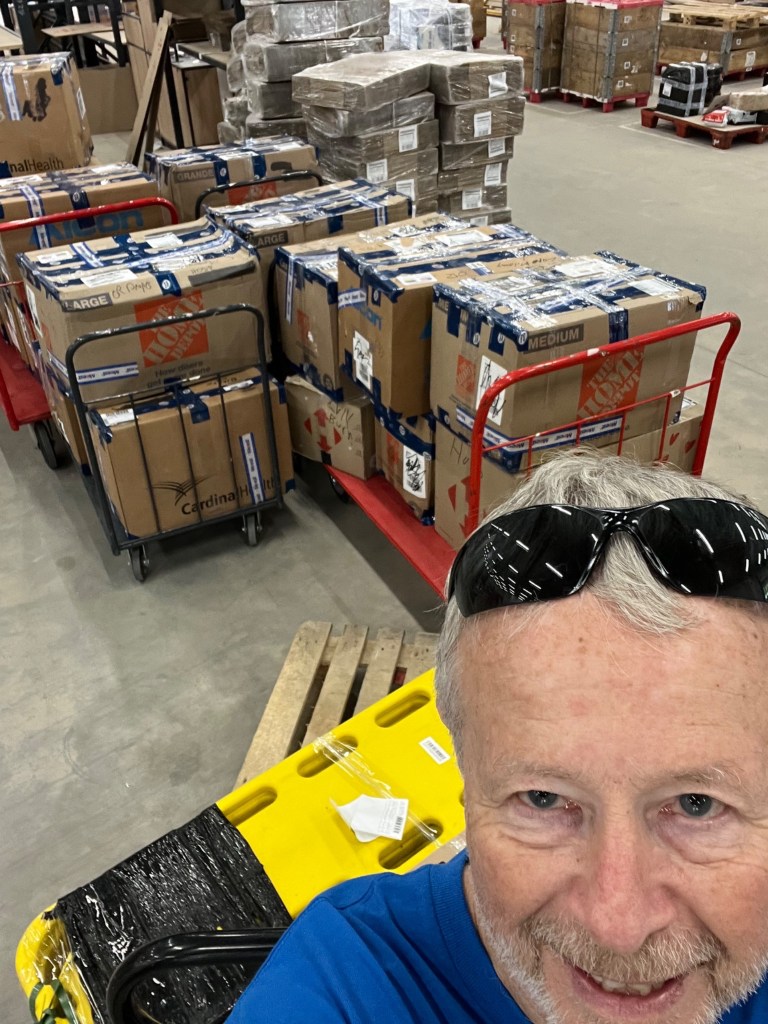
He also ships boxes of medical supplies to Ukraine, where an organization started by American military veterans called the Traveling Colonels sorts and distributes the aid to hospitals. On his most recent trip, Sharp helped transport and sort aid at the group’s warehouse in Kyiv.
“I come and go and kind of maintain a normal life, and these people from a variety of countries are just dedicating entire portions, large portions of their life, every day, every hour, to helping the people in Ukraine,” Sharp said. “I think those are the heroes in this whole story.”
‘The war is still going on’
It was at a shelter in Poland where Sharp met Jay Rivera, a man from Pennsylvania who quit his job to volunteer in Poland and Ukraine. Rivera started Hope Shelter, a Polish transit center, where Sharp offered to help.

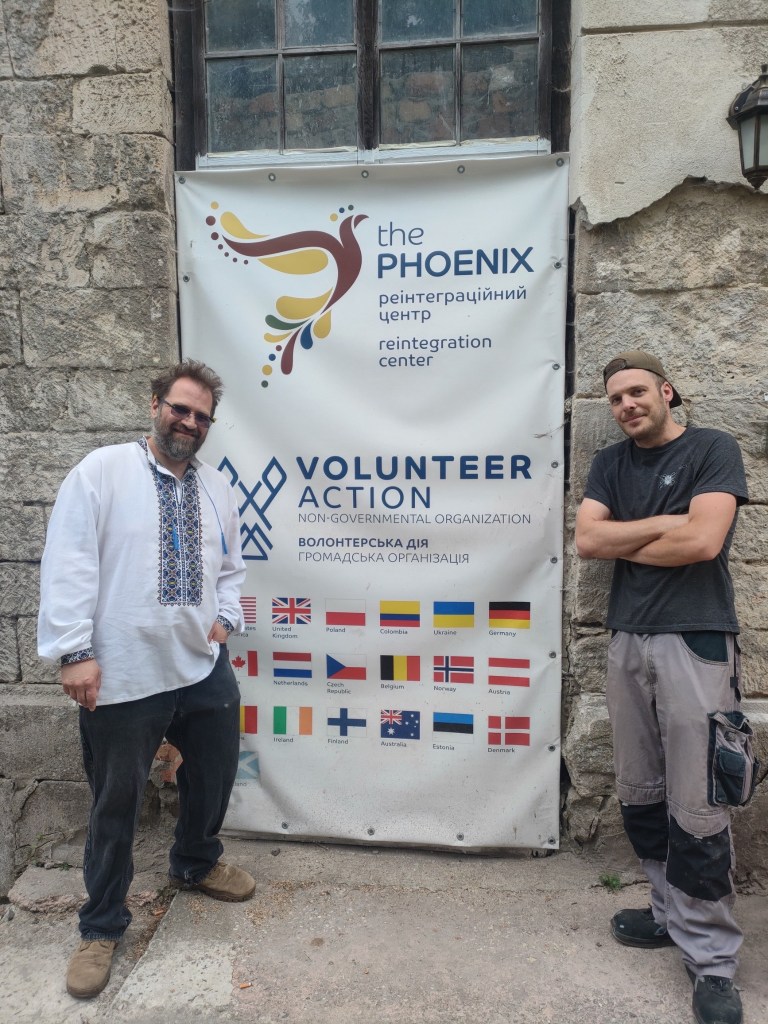
On his recent trip, Sharp helped Rivera with a new initiative: The Phoenix, a short-term shelter where displaced Ukrainians can stay for six months, located in a renovated wing of a 19th century castle in Ukraine.
A project of the Ukrainian organization Volunteer Action, the Phoenix operates less as a traditional shelter and more as a community, Rivera, 40, told Lookout. The shelter provides job training and language courses. The residents contribute to cooking, cleaning and gardening, as well as packing food and donations for people who haven’t evacuated frontline areas, he said.
“The whole idea is that, yes, they’ve had to leave frontline areas, but they still have power and they can still contribute,” Rivera said. “And the easiest way to do that is by doing things that you’re used to doing at home. It gives people a sense of normalcy and a sense of control and ability.”
He said when he was developing the idea for the Phoenix, he wanted it to be sustainable. In addition to growing their own food, the community also has a well for water and is receiving a grant for solar panels.
“It’s completely different than other shelters in Ukraine,” Rivera said. “But that also allows it to be sustainable, because the biggest name of the game, especially now, is how can you keep initiatives functioning” when donations have declined.
He is renovating two more floors of the historic building to be a shelter for veterans and their families.
“The war is still going on,” he said, noting that people being evacuated now are more vulnerable than before because most large organizations have left. “So most of the work being done in Ukraine is being done by small grassroots organizations, by just regular people, and we need help,” Rivera said.
Help might be donating money or time to virtually teach residents a skill like sewing, he said. Or it could be visiting The Phoenix to volunteer.
“For our residents, it’s more interaction, it’s more exposure, it’s more possibilities for the future,” Rivera said. “And it’s also so important for them that they see that people see them, that people care and that they’re not forgotten.”
Medical supplies help Ukrainian hospitals
During Sharp’s first trip to Ukraine, he met retired Marine Corps Col. Monte Dunard, who was also volunteering at World Central Kitchen. The two stayed in touch, and when Dunard started an organization called the Traveling Colonels to provide medical supplies to Ukrainian hospitals, Sharp started sending aid to the group.

Using an international postal service in Portland called Meest, Sharp sends medical supplies such as wound VACS, which provide vacuum-assisted closure to help wounds heal, which the Traveling Colonels distribute to hospitals in need.
“It’s been very beneficial for a lot of soldiers,” Dunard, 68, told Lookout. “Terrible, terrible infections that he’s able to help with with these wound VAC-type devices.”
The group receives supplies from a network of volunteers around the world, some of whom travel to Ukraine to help. Dunard, who lives in Virginia but spends much of his time in Ukraine, reaches out to doctors at hospitals across Ukraine to see what supplies they need and packages boxes for them.
When the orthopedic trauma surgeons at a hospital in Kyiv were using an electric-powered home repair drill to put in screws during surgeries, Dunard raised money to purchase two surgical drills for the hospital.
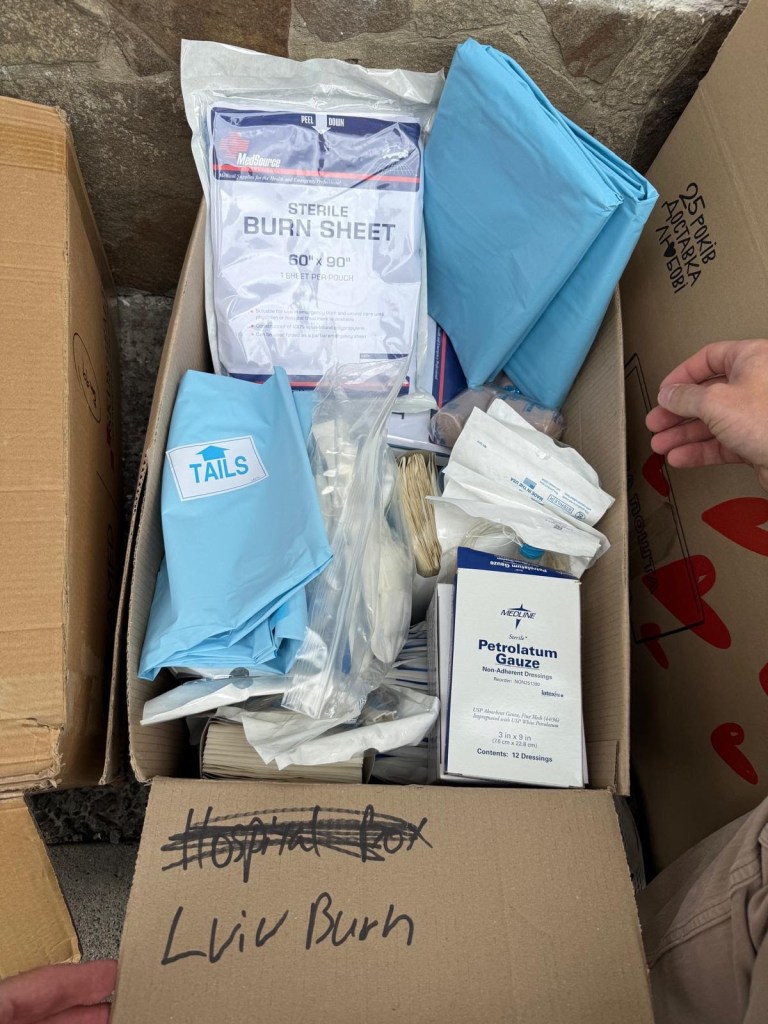
The organization also buys surplus United States military supplies, such as sterile gauze, and hospitals and medical charities donate boxes of items such as needles, syringes and sutures.
“Everything from tape to IV lines, IV needles, different things,” Dunard said. “We package them up every day.”
He said getting the proper medical instruments to places that can use them to help soldiers and civilians reduces suffering.
“Things are needed, help is needed, donations are needed, and this is one way that people can help,” Dunard said.
Plans to return
When asked how the experience has changed for him over the past four years, Sharp said it’s inspired him more than anything.
“I thought maybe doing all this work would quell my rage,” he said. “It has not. Getting to know families with kids who have to go in the bomb shelter … I think it’s made me every bit as outraged that anyone would do this to any other human being.”
He said when he discovered that he could ship aid through Meest rather than carry it with him on his trips, he told a Kyiv city councilor it may not be important for him to come back.
“She said, ‘Oh, we really want you to keep coming back. It really helps our spirit to know there’s people out there from America who care about us and are going to help us through this terrible time,’” Sharp said.
He described Ukrainians as stoics who are going to keep going.
“What else are they going to do? They’re going to say, ‘Oh, I just can’t stand this anymore, I’m going to give up?’ That’s not their nature. They’re not going to give up. They want to have a free country for their kids. They’re never gonna deviate from that, no matter how terrible it gets.”
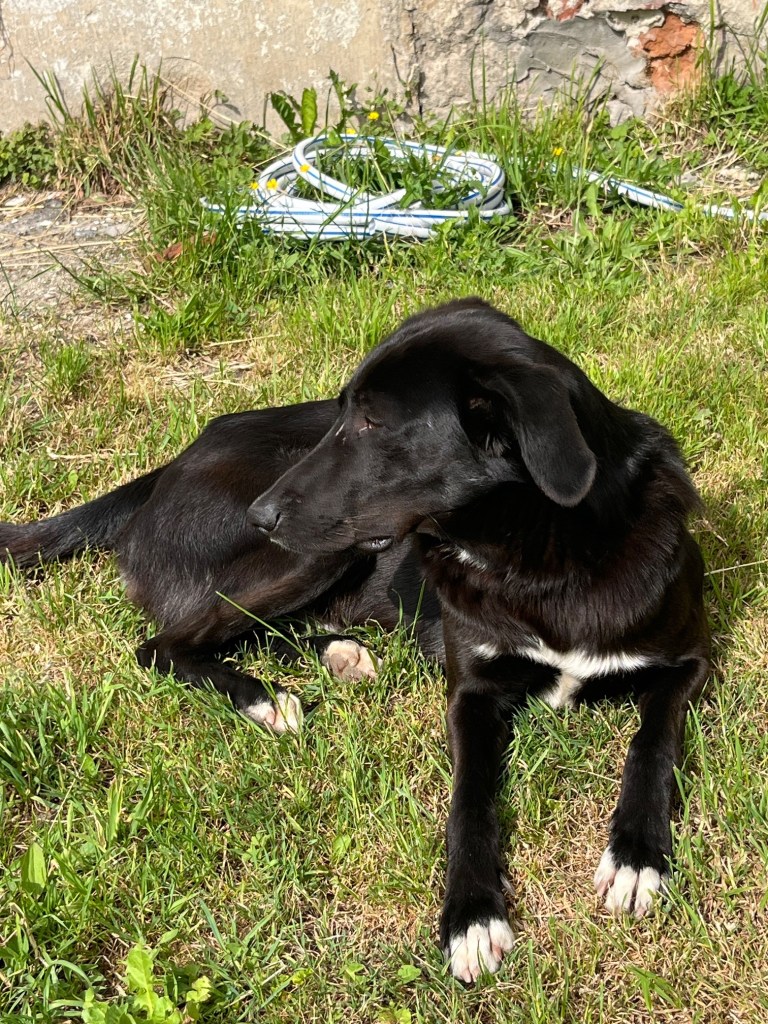
Sharp plans to return in October to work for the Traveling Colonels and The Phoenix. He also intends to return from that trip with Boots, an 18-month-old stray dog at The Phoenix who is currently in quarantine with a Ukrainian vet.
“There are hundreds of thousands of stray dogs in Ukraine, and I’ve always wished I could take them all home,” Sharp said. “So the best I can do is take one.”
