
 Trying to add a payment method? You can do this on the

When Erick Wonderly Varela first arrived at the Whiteaker Community Market, they brought with them a folding table, three stickers, a handful of prints, and a little encouragement from their mother.
As artist for as long as they could remember, Erick had never quite approached their creative practice as a business. At the time, they were working full-time as a fishmonger. Showing their work at a local market was an experiment in what might be possible.
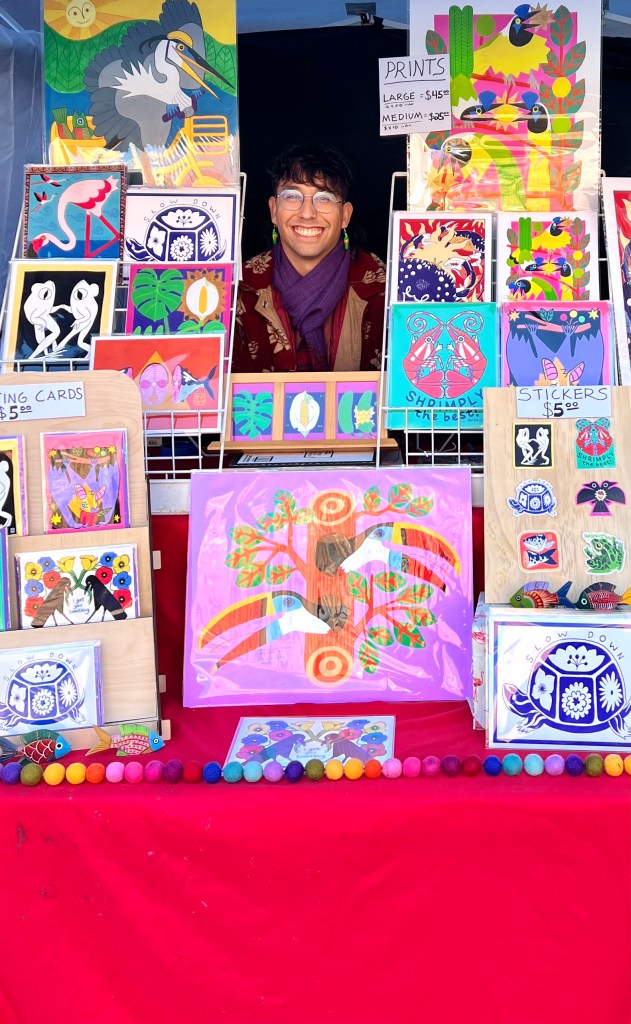
Six years later, Erick is a full-time artist with murals throughout the community, commissioned projects, and artwork and merchandise available online, in galleries, and at markets. Their journey reveals something often overlooked: the real value of an arts market extends beyond the transactions taking place. For creative entrepreneurs, markets offer places to experiment, learn, build relationships, and find the support needed to turn an artistic practice into a viable business.
At the Farmers Market Pavilion, partnerships are intentionally designing experiences that evolve what arts and makers markets can achieve. With the City of Eugene providing infrastructure and supportive services, organizations like Lane Arts Council or the Native American Arts & Craft Makers activating that infrastructure with intention, and artist, makers, and community members showing up to participate, a broader ecosystem is created.
Last year alone, more than 1,000 distinct artists, makers, vendors and organizations participated in Pavilion activities.
“The content is the people,” says Jana Meszaros, steward for the Farmers Market Pavilion. And those people come with different ambitions. Some are building businesses. Others are developing a creative practice, strengthen cultural connections, or finding the confidence to share their work for the first time. Markets create room for them all.
Through her leadership of the Native American Arts & Crafts Makers, held on the first Sunday each month at the Farmers Market Pavilion, Marcy Middleton has watched relationships at the market achieve something greater.

As a Navajo jewelry maker herself, Marcy is skilled in her craft. But when she saw another jewelry maker use a new material in a way she hadn’t seen, her curiosity led to an engaged conversation and a sharing of skill. As the market wrapped, that same jewelry maker stepped up to her both offering a bit of material so Marcy could experiment with it herself. It’s that kind of collaboration that can plant the seed something deeper. Marcy has seen makers lend equipment, share knowledge, offer encouragement, develop friendships and even share rides. These events create opportunities for Native artists to share their culture and connect with one another and the broader community.
Sometimes the first thing a new entrepreneur needs is confidence and, in this way, arts markets become the ideal classroom. “Not everyone is a salesperson,” shared Marcy. But when a market is more than a welcoming gathering place and prioritizes relationships, trust, visibility, and connections, these entrepreneurs can get the support they need to build confidence, skill, and the supporting infrastructure.

Erick knows how important that support can be. Outdoor markets require equipment, including a canopy that can withstand Eugene’s unpredictable weather. “My first canopy was gifted to me by a market customer, and each of the four sandbags I needed to pair with it were given to me by four different vendors at the same market,” remembers Erick. Fellow vendors helped remove a barrier to participation. It’s that kind of informal mentorship and support that can make entrepreneurship more accessible.
Organizations like Lane Arts Council are creating additional entry points through First Friday Art Walk and its associated Artist Marketplace. For emerging artists, regularly reoccurring events provide opportunities to experiment with what works, build audiences and business without the financial commitment of a permeant store front.
Sometimes, creating relationships that often can extend beyond a single event.
As Maya Banyacski, the Community Arts Coordinator behind First Friday at Lane Arts Council, describes, someone might meet an artist at First Friday Artwalk, not purchase anything that evening but recognize them at another market, or commission work later, or even recommend them to a friend. It’s a broader progression at play from artists gaining opportunity, relationships, and skills, to an audience beginning to grow. Those relationships create additional opportunities and often times bubble over into new collaborations that builds a deeper creative economy.

These connections help artists develop audiences and create opportunities for future business. They also bring people downtown, connecting creative activity with local businesses, gathering places, and community life.
Together, these experiences demonstrate how creative entrepreneurship grows through more than individual talent. It requires accessible spaces, opportunities to learn, supportive relationships, and communities willing to invest in them.
Arts Markets are more than places to buy art. They are entrepreneurial infrastructure that goes beyond what a building, grant program, or formal mentorship imitative could. They are important incubators that launch businesses, build community. And they remind us of what reciprocity looks like, how it can reduce barriers, and open opportunities.

For Erick, a few stickers, prints, and folding table has become a creative livelihood. Their story reflects one shared by so many, sometimes a thriving business looks like a public marketplace, an encouraging conversation, or five fellow artists sharing what they have.
And that investing in arts markets means investing not only in the work artists create, but in the people and relationships that make Eugene’s creative economy possible.
About Arts & Business Alliance of Eugene
Arts & Business Alliance of Eugene is a nonprofit organization that connects, supports, and advocates for arts and culture as essential contributors to Eugene’s economy, identity, and quality of life. Through partnerships with artists, businesses, civic leaders, and community members, ABAE works to strengthen the creative ecosystem that makes Eugene a vibrant place to live, work, and gather. As conversations continue about the future of Eugene’s cultural core, ABAE believes stories like this one help illuminate how the arts are essential to a thriving, resilient downtown.

More from ARts & Business Alliance of eugene


