
 Trying to add a payment method? You can do this on the

Until a 2020 wildfire burned most of the trees and closed trails, 50,000 people a year hiked to see the Opal Creek Wilderness, once ranked by Audubon magazine with the Grand Canyon as one of the nation’s top 10 “paradises preserved” in the 20th century.
The fabled old-growth forest east of Salem is set to reopen to the public next summer, but what will you find there?
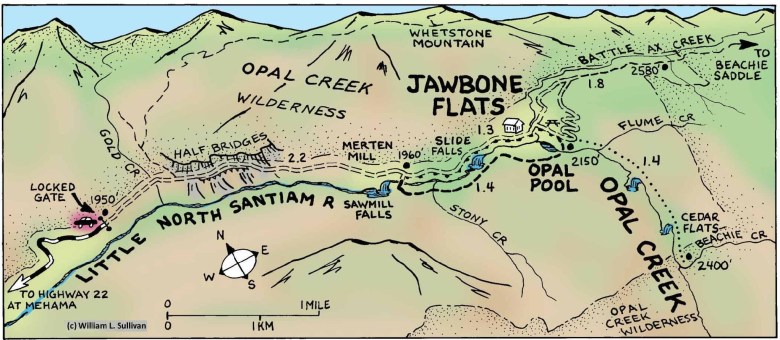
The Beachie Creek Fire of 2020 was ignited by a lightning strike just 2 miles from the Opal Creek Ancient Forest Center, the old mining camp at Jawbone Flats. The blaze blew up the valley like a volcanic blast, burning 200,000 acres, including the city of Gates.

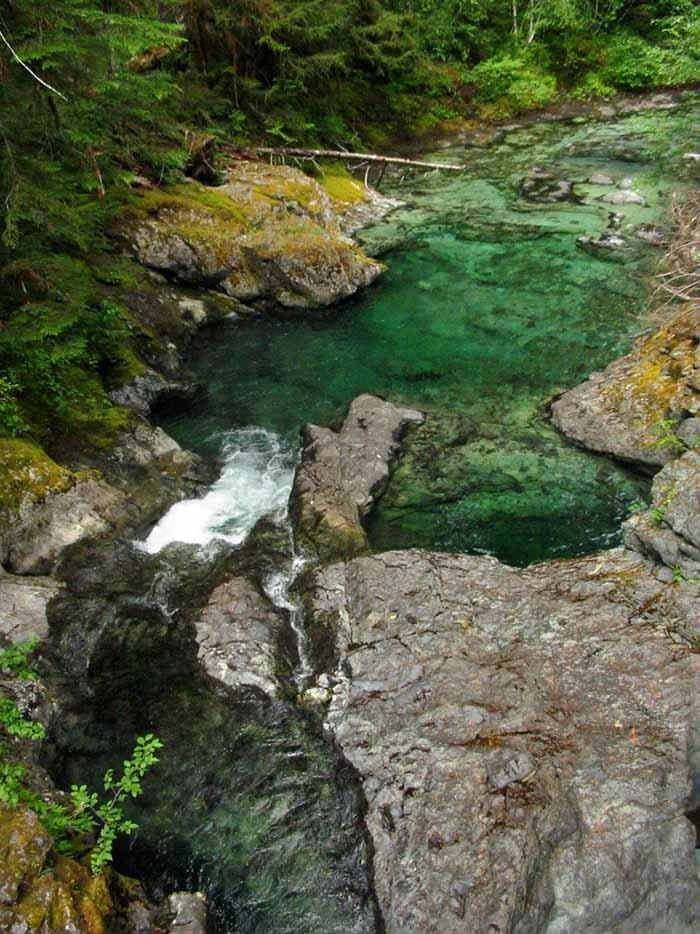
Today the clear green water in Opal Pool is surrounded by a moonscape of bare rock and snags blown flat by the force of the firestorm.
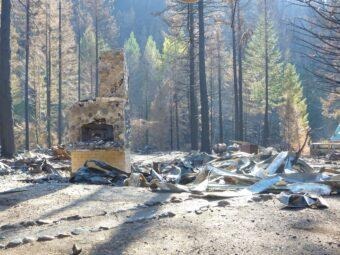
Of the 23 cabins at Jawbone Flats, only one remains. The rest are burned debris fields with charred chimneys. A few trees at the wilderness retreat center survived, making it a small oasis in a scarred valley.
The story of Opal Creek is a tale of preservation against long odds — then of heartbreaking loss and finally, of hope.
Already millions of hemlock tree seedlings, huckleberry bushes, beargrass, salal, Oregon grape, and other native plants are coming back. The Ancient Forest Center is planning to rebuild, and in the meantime they’re organizing backpacking adventures for kids all over the state. Despite the fire, the nonprofit group’s mission remains unchanged: to bring people back to nature.
After six years of closure, the Opal Creek Trail is expected to reopen to hikers in July 2027. Much work still needs to be done, but it’s looking like the hike will be once again be worth a journey.
Let’s start with a little history. Gold miners hiked into the Opal Creek valley in 1860, when prospectors staked mining claims. The miners built a dozen cabins and riddled the hillside with tunnels before the boom faded. In 1933 the government set up a small Civilian Conservation Corps camp at the mouth of Gold Creek.
The cabins were rotting away when Jim Hewitt began buying up the old claims, determined to save the valley from development. Hewitt was the father-in-law of Oregon governor Vic Atiyeh and the grandfather of Opal Creek’s preservationist champion, George Atiyeh.
When George Atiyeh took over as caretaker of Jawbone Flats in 1969 he was 21, shaken by Army service during the Vietnam War and inspired by the radical student protesters he’d met at the University of Oregon.
When he and friends discovered a Forest Service crew was surveying a road into Opal Creek to log off the valley, they donned camouflage gear and haunted the workers as nonviolent guerrillas.

George and his friends slipped through the forest, pulling up survey stakes behind the workers’ backs. They poured snow into the gas tanks of the crews’ motorcycles. Finally the Forest Service employees were so angry that they stormed into Jawbone Flats with guns at the ready.
The Forest Service men threatened to burn the place down if the harassment didn’t stop.
“Tempers were out of hand on both sides,” George later told me. “They were cold, tired, hungry and wet. All of us were edgy. My friend aimed his rifle. Bloodshed was just seconds away. I kept my gun in my holster, but looked the men in the eye and told them they were on private property. I took their weapons, dumped out the bullets, and returned them empty. They left peaceably, but I knew the trouble had only begun.”
A few days later 15 police officers circled Jawbone Flats, set up a machine gun by the road, and demanded surrender. George and his friend came out unarmed. Whisked away to the Marion County jail, George despaired that he — and the Opal Creek forests — faced a grim future.
To George’s surprise, local North Santiam Valley citizens raised money for his bail. A grand jury reviewed his case and set him free. George’s friend faced trial, but a jury found him innocent, too. In fact, the judge threatened the Forest Service men with jail if they didn’t change tactics.
“It was a turning point in my life,” George said. “I realized that the system could work after all.”
George began blocking Forest Service logging plans with lawsuits. He appealed to conservation groups for help. He publicized Opal Creek on magazine covers, TV specials and newscasts. An avalanche of nationwide support swept the wilderness effort to victory in 1998.
In the cataclysmic fire of 2020 that reduced Opal Creek’s ancient forest to snags, five people died. One of them was George Atiyeh, 72, at his home a few miles downriver at Elkhorn.
Nathan Reynolds became executive director of the nonprofit Opal Creek Ancient Forest Center after the fire. He grew up in southwest Washington, impressed by the devastation and regrowth at Mount St. Helens since its 1980 eruption.
His favorite quotation is the old saying, “The best time to plant a tree was 20 years ago. The second-best time is right now.”
Reynolds told me about the difficulties he’s faced trying to reopen the trail to Opal Creek. The trail is actually an old road that’s closed to private vehicles.
After the 2020 fire the Willamette Forest wanted to clear-cut everything within 150 feet of all roads in burned areas, including the Opal Creek Trail. Reynolds’ group petitioned to stop the logging and won.
Then the Federal Emergency Management Agency said Jawbone Flats didn’t qualify for disaster relief funding. Reynolds’ group appealed and won.
Next the Forest Service told Reynolds that they wouldn’t help reopen the road-trail to Jawbone Flats because it was private. The Opal Creek nonprofit protested that the road belongs to the Forest Service, and won.
For next spring the Forest Service has hired a contractor to rebuild Half Bridges, where the road-trail skirts a cliff. The slope is so steep that wooden trestles have to support the outer edge of the roadbed.
In the meantime, FEMA has reluctantly provided funds to fly out the burned debris of Jawbone Flats using helicopters. This will allow the nonprofit to fill in open septic tanks and make Jawbone Flats safe for hikers when the trail reopens next year.
What will you find at Jawbone Flats next summer? Well, there is one large cabin that survived. Renovated in 2000, the cabin is sometimes available for rent. The place sleeps 13 and costs about $2,000 a night, so it’s not for everybody.
The nonprofit has plans for rebuilding a smaller educational campus at Jawbone Flats. It will be a biological field station to study the recovery of forests after fire.
Opal Creek is one of the few places in the Northwest where an entire burned watershed is being allowed to regrow naturally, without salvage logging or replanting.
Opal Creek will also be coming back as a destination for hikers. The reopening of the Opal Creek Trail in 2027 will be a chance to revel in the victory of preservation, the tragedy of loss and the balm of hope.

