
 Trying to add a payment method? You can do this on the


QuickTake:
Marion Malcolm was an activist and organizer who was a driving force behind social justice efforts in Eugene and Springfield from the 1960s onward. She served as a mentor to young activists and a unifier of communities, cultures and groups. A memorial service is scheduled for July 20.
Marion Malcolm’s signature activism strategy was simple: Show up.
Whether it was for a cause, a friend, or a moment when the opportunity to make a difference mattered most, she was there. And she brought others with her.
Malcolm was a well-known social justice organizer in Eugene and Springfield and lived by the “Respectful but Relentless” motto she later gave to Springfield Alliance for Equity and Respect. Known for her assertive but human approach, her mentorship of other activists, and her humor, Malcolm changed lives in her drive to make her corner of the world a more just place.
Malcolm died April 27 of complications from pulmonary fibrosis at the age of 87. Her life will be celebrated at a public memorial service at 6:30 p.m., July 20 at Venue 252 in Eugene.
A master organizer
From a young age, Malcolm was sensitive to injustice. She also had a loud voice. Her brother remembers hearing her shout “It’s not fair” from half a block away in their hometown of Leonia, New Jersey.
A child of missionary teachers, Malcolm credited her parents for instilling in her a sense of responsibility toward her “siblings in the human family,” as she wrote in her own obituary. She earned a bachelor’s in English from Cornell University and a master’s in education from Brown University before being inspired by the Civil Rights Movement. She participated in a Maryland sit-in and a protest of nuclear testing in front of the White House. She then spent a year teaching abroad in India.
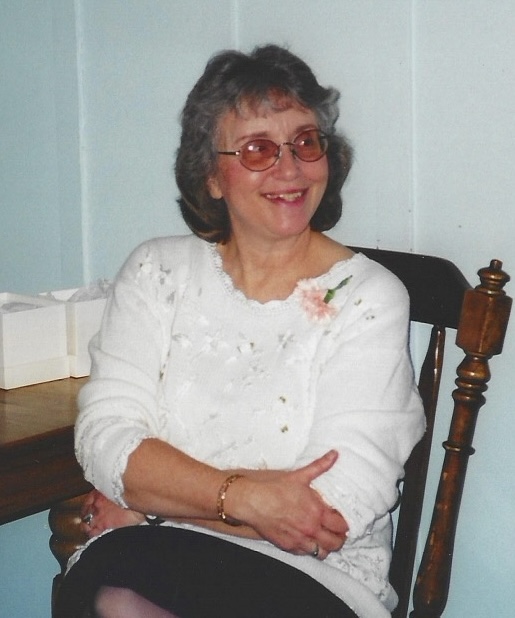
Her life shifted to the West Coast upon her return from India for her first husband, Bruce Barnes’, job as a professor, first to Berkeley, California, in 1964 and two years later, to Eugene.
Malcolm was involved in a long list of causes in Eugene and Springfield, maintaining a finger on the pulse of community activism until the end of her life.
Through her work with the Women’s International League for
Peace and Freedom and her leadership on the steering committee for the organization formerly known as Clergy and Laity Concerned About Vietnam (later renamed the Community Alliance of Lane County), she organized movements against causes as international as the Vietnam War and apartheid as well as issues closer to home, including farmworkers’ rights and racism in schools. She was instrumental in the successful 1974 campaign for public kindergarten and the opening of Egan Warming Center, which provides shelter to people who are houseless during cold winter nights.
Guadalupe Quinn, another leader on the Community Alliance of Lane County steering committee with Malcolm, led anti-racism training sessions with her in the late 1980s. Quinn, who is Mexican, said having Malcolm co-lead the training as a white ally was critical to their success. When workplaces mandated antiracism training, the resulting audiences could be defensive and hostile.
Once, they were facing a particularly resistant group at the University of Oregon. Malcolm told Quinn halfway through that she would happily cut the training short if Quinn wanted to, but she also would stick it out to the end. They decided to finish the training.
“It was a hard thing to do, but we did it,” Quinn said. “We felt really awful, but at the same time we felt really good.”
Longtime activist Larry Lewin met Malcolm through their shared work protesting the U.S. involvement in the Central American wars of the 1960s-1990s. He learned from Malcolm the importance of “stacking wins.” Even if it was something small, like getting a photo of 60 protesters in front of the Eugene Federal Building in The Register-Guard newspaper, a win was something you could build on and use to attract more people to the movement, Lewin said.

Andrew Barnes, Malcolm’s son, was raised on picket lines and in a house full of lively political discourse with his older brother, David Barnes, and younger sibling, Bayla Ostrach. Now a union organizer, he learned one of the biggest lessons from his mom by observing how she prioritized human connection.
“I wish I could be half as good as she was at really genuine deep relationships with people, not just sort of the surface, you know, ‘we’re involved in something together’ but connections on the level that was both very human — she didn’t do it just out of an organizing lens — but also very instrumental to how she saw organizing in the world,” Barnes said. “It’s about relationships.”
In the late 90s, Malcolm turned her focus to Springfield as more people of color moved there for cheaper housing and were met with racism and a lack of resources. In 1997, the Community Alliance of Lane County established the Springfield Alliance for Equity and Respect (SAfER).
Nancy Bray, a retired Springfield Public Schools educator who taught English language development, said when Malcolm’s focus shifted to Springfield, she put the pressure on the school district to hire three multicultural liaisons to bridge the community and the district. The superintendent at the time, Nancy Golden, agreed to fund the positions, but only at Malcolm’s urging, Bray said.
“She was unafraid to point out what’s not working,” said Malcolm’s friend and fellow activist Roscoe Caron.

‘She made the revolution fun’
Malcolm loved the famous paraphrase from anarchist Emma Goldman: “If I can’t dance, I don’t want to be part of your revolution,” recalled her second husband, Stefan Ostrach.
She wrote in her obituary about how she came to believe the Vietnam War was part of a larger trend of the United States’ drive to “dominate the world.” This prospect was not overwhelming to her, but freeing.
“If the struggle was to be lifelong, it was okay and necessary to take a weekend off or to take a vacation, to find ways to replenish and rejuvenate so as (to) sustain energy and commitment,” Malcolm wrote.
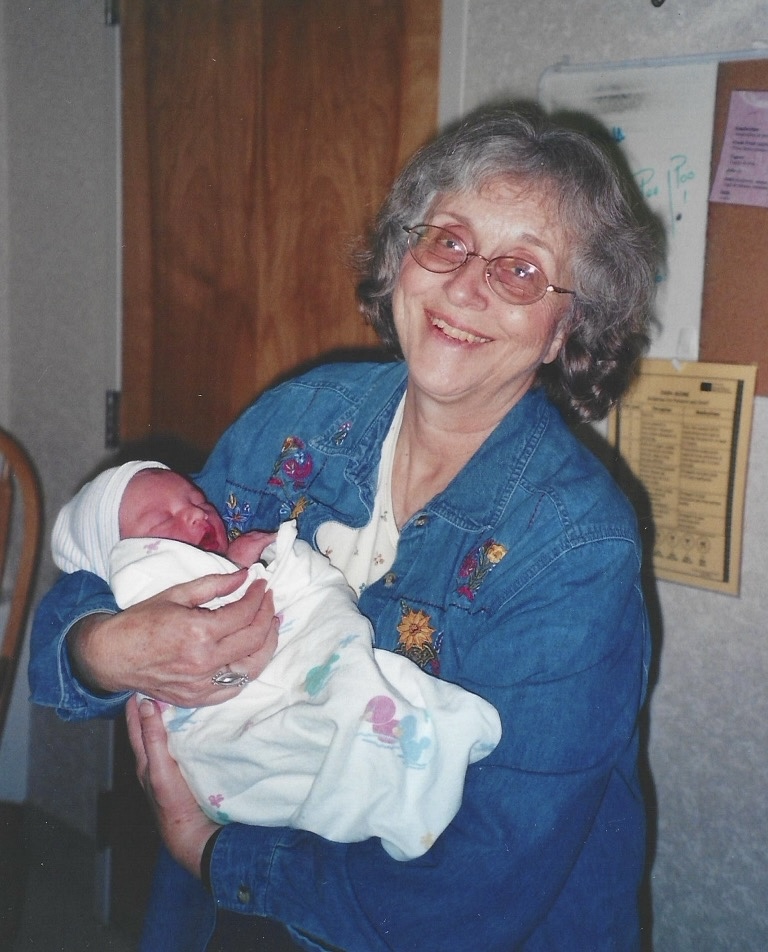
Malcolm’s favorite ways to rejuvenate were to go camping with her friends and family and throw parties. She and Ostrach owned a house nicknamed May 1 because of its location on Mayfair Lane and the corresponding date of International Workers’ Day. It was both a cooperative living arrangement for their family of five and other activists, as well as the location of many memorable gatherings.
Caron, who lived at May 1, remembered how they would put ice and beers in the washing machine as a makeshift cooler, blast Motown for hours, and have stimulating conversations. Bray remembered sing-alongs where they’d sing union songs such as “Solidarity Forever”, “We Shall Not Be Moved” and “Bread and Roses”. At the annual New Year’s Eve party, they’d sing the Cuban patriotic song “Guantanamera” on the front porch at midnight.
“She was tough as nails, and if she got you in her sights, you better be ready because she would come full tilt,” Lewin said. “But she was just fun. She could laugh, and we would eat and drink. She made the revolution fun.”
A guide to the next generations
Eric K. Ward was an intern at the Community Alliance of Lane County in the late 1980s. As a Black “quintessential punk-rocker,” Ward said he was cynical toward people outside his subculture at the time. One day, however, Malcolm did something he had never seen a white person outside the punk scene do.
Ward was sitting with Malcolm on the porch of the organization’s old office on Blair Avenue, smoking cigarettes, when it happened.
“What the hell,” he heard Malcolm say.
Across the street, a federal immigration officer had stepped out of his cruiser. Ward hadn’t even registered the officer’s green uniform before he saw Malcolm marching toward him.
“I just saw her in motion,” he said. “And by the time I realized she was moving, I had to catch up with her. She was just fearless.”
Malcolm confronted the officer with a commanding voice. She told him about the fear and discrimination immigration authorities were causing in immigrant communities. At the time, the Blair neighborhood consisted of a growing Latino population, as well as Asian and Pacific Islanders, poor whites, students and hippies. Ward said the officer yelled at Malcolm and threatened to arrest her, but she didn’t move, and eventually, he left.
These days, Ward is a senior fellow at the Southern Poverty Law Center and has worked for several national social justice organizations. But back in the 1980s, Ward said, he viewed Malcolm and some of the other alliance leaders “just as hippies.”
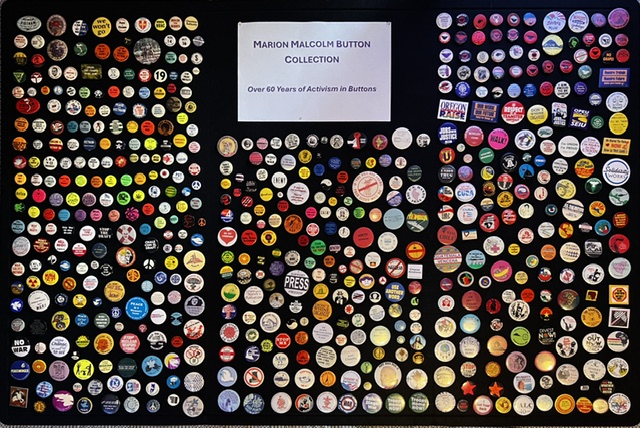
Malcolm’s encounter with the immigration officer changed his mind. Today, Ward looks back at the moment and sees it as one of the earliest versions of solidarity he witnessed on behalf of immigrants.
“Many decades later, people are having to do it each and every day, sadly now, to stand up for our neighbors and to show our neighbor they’re not alone,” Ward said. ”And every time that happens, I think back — that it is actually not something new.”
Malcolm brought Ward along on many of her meetings with community leaders while he was an intern and showed him the importance of listening to understand a group or individual’s experience and needs — not her own interpretation of what was happening and what they needed.
He was one of many young people whom Malcolm took under her wing.
Johanis Tadeo, director of SAfER, was another of Malcolm’s mentees. She encouraged him to apply to lead SAfER in 2016 after seeing his efforts to provide culturally affirming programming for Latino youth.
Malcolm’s fierce advocacy for Tadeo during his first meeting with Springfield city officials stands out in his memory. In the meeting, Tadeo recounted injustices Latinos were facing. But the city officials appeared unmoved. Then, Malcolm repeated Tadeo’s stories with more emphasis and the officials responded with concern. She scolded them.
“How come you’re looking at me?” she asked. “Johanis just said the exact same thing and none of you gave him the respect to even look him in the eyes and hear what he has to say.”
In her last years, she helped Tadeo secure grant funding to keep SAfER alive.
“She was the heartbeat,” Tadeo said. “Her dream was for a House of Unity (SAfER’s headquarters) to be thriving with people of color and for the Latino community to no longer be afraid to walk the streets.”
In a humorous ending to her own obituary, Malcolm observed that the world was “not discernibly better” after her lifetime of activism, except for the impacts she made locally.
Friends and family — who perhaps received Malcolm’s greatest impact — have found themselves wondering in the months after her death what advice Malcolm would offer in the face of new community challenges.
But Quinn, her longtime colleague on the CALC steering committee, knows what Malcolm’s message would be.
“She would absolutely be telling you: “You better be out there.”
Memorial service details: 6:30 p.m., July 20, at Venue 252, located at 252 Lawrence St., Eugene

