
 Trying to add a payment method? You can do this on the

QuickTake:
Most of us who love the high Cascades have our own secret huckleberry hunting ground.
Some of the best huckleberry picking I’ve found in the Mount Jefferson Wilderness is at one of the few swimmable lakes near the mountain that doesn’t require an advance permit to visit.
Bring berry buckets on the easy 1.9-mile hike to Cabot Lake, on the side of Mount Jefferson toward the Metolius River. For a longer hike, continue up to deep, rock-rimmed Carl Lake.

The trail begins in an area that burned 23 years ago. It’s now a sea of snowbrush, with a few silver snags and plenty of views.
Snowbrush is a waxy-leaved bush with a pungent smell. It thrives after a fire and was long thought to be a weedy problem that hinders forest regeneration. Now the opposite appears to be true. The brush protects tree seedlings from the scorching sun, allowing them to get started.
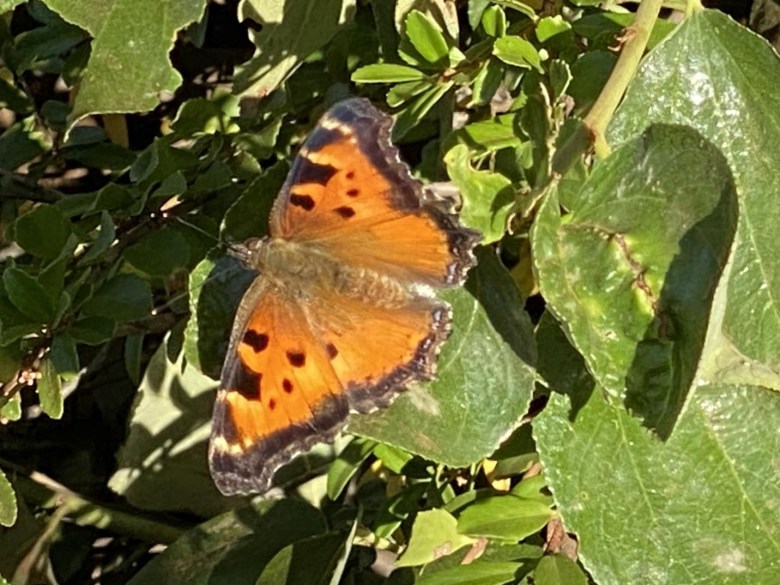
Meanwhile the pungent smell attracts tortoiseshell butterflies that come by the millions to lay their eggs in snowbrush to devour the waxy leaves. The butterflies and the brush help the new forest get started more efficiently than labor-intensive brush-clearing, tree planting and shade cards.
To find the trailhead, drive Highway 20 east across Santiam Pass. Beyond the pass 8 miles, turn left at a “Mt. Jefferson Wilderness Trailheads” sign near milepost 88. Drive north 4.4 miles on paved Jack Lake Road 12 and turn left on one-lane Forest Service Road 1230 for 1.6 miles of pavement and an additional 7 miles of gravel to road’s end, following signs for the Cabot Lake Trailhead (GPS 44.5737 -121.7315). The final 5 miles of road are rocky. Drive slowly to avoid tire damage.
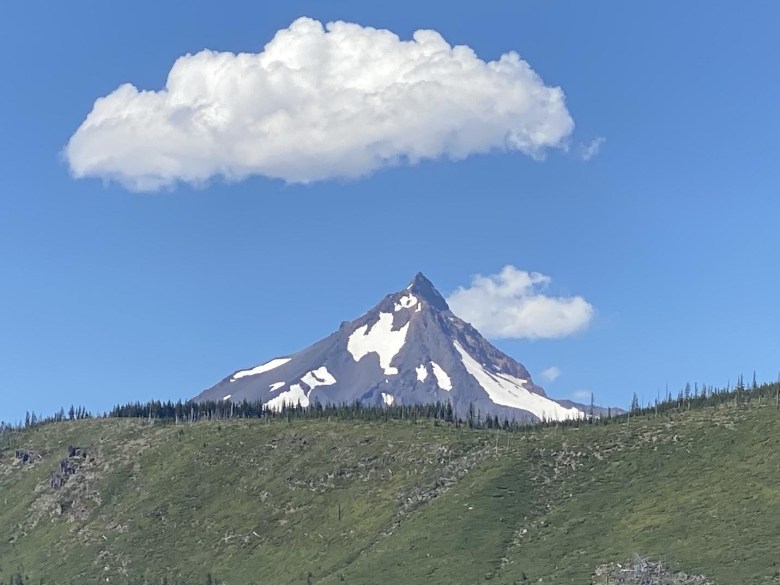
The trail begins with views of the top half of Mount Jefferson. Snags and young lodgepole pines protrude from a sea of 6-foot-tall snowbrush. At the 1.6-mile mark you suddenly leave the burn behind. From here on, a wealth of blue huckleberries lines the trail.
Huckleberries also require fire to thrive. You know this if you’ve gone huckleberry picking. In the deep dark forest you’ll see plenty of huckleberry leaves, but no berries. The plants require sun to produce fruit and reproduce. Only in old fire zones, under powerlines and on roadsides are you likely to fill a basket. Here at Cabot Lake, at the edge of an old burn, the huckleberry bushes are exuberant.
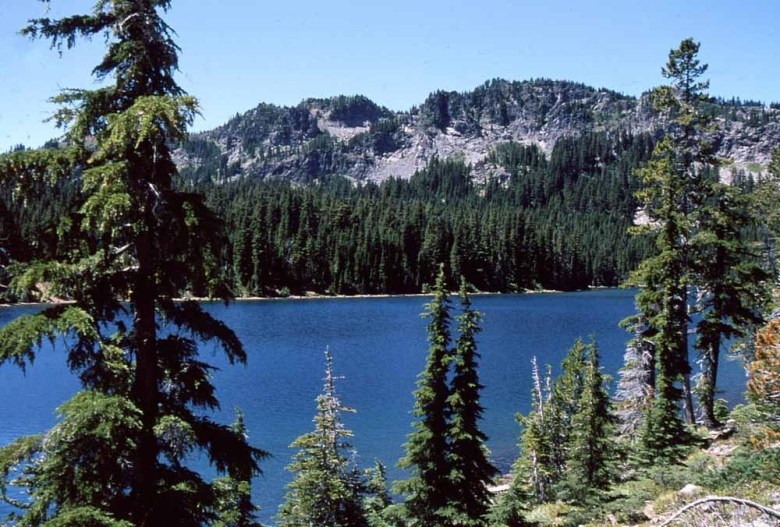
At the 1.9-mile mark look for an unsigned 200-foot side trail that leads to a tiny beach at Cabot Lake, a swimmable pool rimmed with forest and brush. This is a good turnaround point for an easy huckleberry trip.
If Carl Lake is your goal, return to the main path, which now heads uphill in earnest. After a dozen switchbacks, the trail levels somewhat, passing three ponds. A final level stretch leads to large blue-green Carl Lake.
If you plan to stay overnight in the Mount Jefferson Wilderness you will need to buy an advance permit. These permits are limited and can be hard to get. Also remember that campfires are banned.
At Carl Lake the main trail leads left around the south shore, past a small heather meadow with purple aster and white partridge foot. There is no official trail around the lake’s north shore, a bare bedrock rim that still bears the marks of the Ice Age glacier that gouged out this lake’s basin.
For a better view, you can climb from Carl Lake to South Cinder Peak. In the middle of Carl Lake’s south shore, take the turnoff for Shirley Lake. This trail traverses up the sunny side of a steep, scenic valley for 1.5 miles. At an alpine pass, turn left on the Pacific Crest Trail for 0.2 mile until the red cone of South Cinder Peak is immediately to your right. Then follow a user trail to the right, across a cinder flat and up the steep, loose slope. Views promptly unfold of Mount Jefferson and the Three Sisters.
Most of us who love the High Cascades have our own secret huckleberry hunting ground. Maybe yours is an out-of-the-way place like Notch Lake or Bingo Lake. That’s fine. I won’t send crowds there to steal your berries. There’s plenty at Cabot Lake for everyone.

